A few observations can help you have a better conversation about your irrigation system.
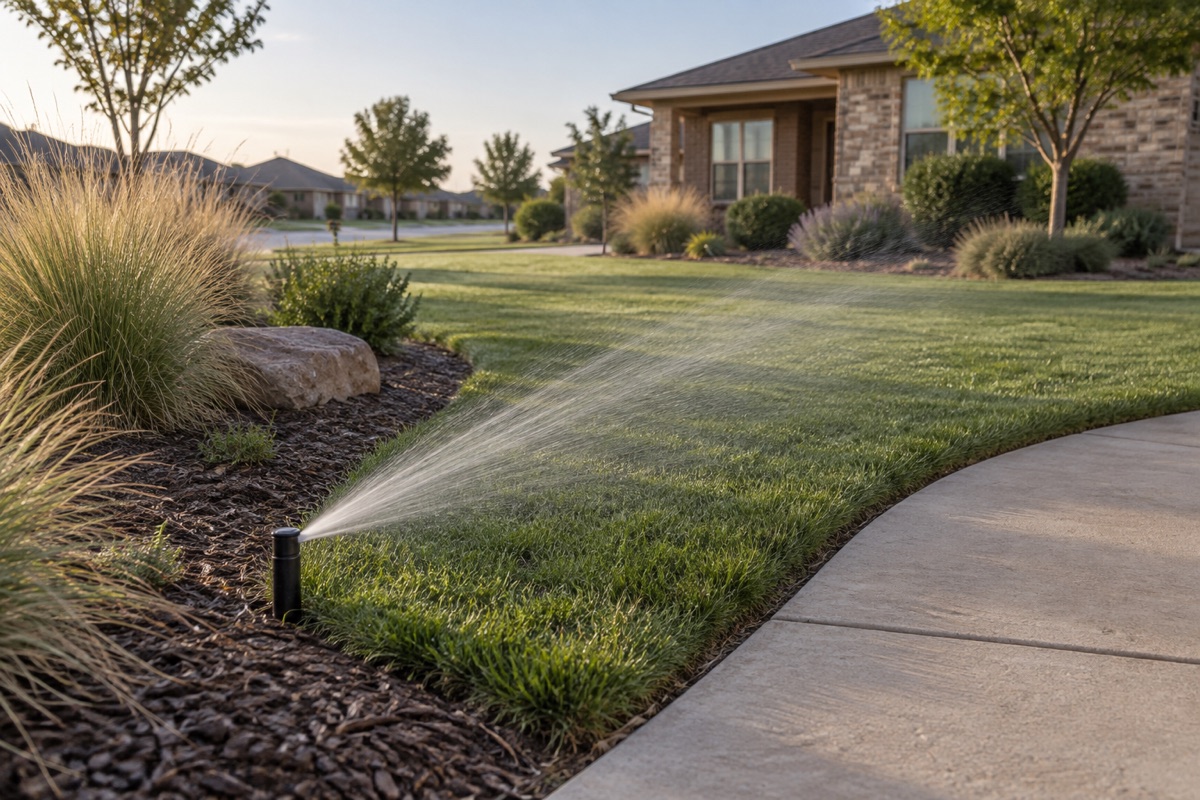
Watch a complete watering cycle
Look for water hitting pavement, heads hidden by grass, unusual pooling, and areas the spray does not reach. Write down which zone is running when the issue appears. Do not enter valve boxes or handle wiring to investigate.
Check the system before changing the schedule
Adding runtime can disguise a coverage issue while making another part of the yard too wet. Ask about leaks, head alignment, pressure, and soil conditions before increasing watering time.
Adjust to the season, not just the calendar
Review the schedule as weather and landscape needs change. A controller with weather-based features may help, but setup and equipment compatibility matter. No controller can compensate for a broken pipe.
Check current local watering guidance
Watering guidance can change. Review the City of Amarillo’s current information before setting a schedule. Do not assume a past drought notice still applies.
Keep a simple system record
Save the controller model, a zone list, previous repair invoices, and the location of the irrigation shutoff. These details can make troubleshooting and seasonal service more efficient.
A Panhandle watering calendar
| Month | Typical lawn need | Tips |
|---|---|---|
| Nov–Feb | Dormant; water only in long dry, warm spells | System winterized; hand-water new trees monthly if the ground is dry and above freezing. |
| Mar–Apr | Light; turf is waking up | Start up after the hard-freeze risk passes, usually mid-April. Check every zone for freeze damage. |
| May–Jun | Rising quickly with heat and wind | Water early morning, before the wind picks up. Use cycle-and-soak on clay. |
| Jul–Aug | Peak demand, often 1 to 1.5 in/week including rain | Check heads monthly; one broken head can brown a whole section. Skip a cycle after a good storm. |
| Sep–Oct | Falling | Cut run times as nights cool; winterize before the first hard freeze. |
Use the run-time calculator to turn inches into minutes for each zone. Texas A&M AgriLife's TexasET network publishes local evapotranspiration if you want to fine-tune.